
The Love Letter to a Tired Landlord: Direct-to-Vendor Letters, From £1 to £10,000
From handwritten notes to robotic pen-plotters: an honest, slightly sarcastic guide to UK direct-to-vendor letters — the cheapest way, the most expensive way, and the compliance rules.
6 October 2026 · Vestos Property
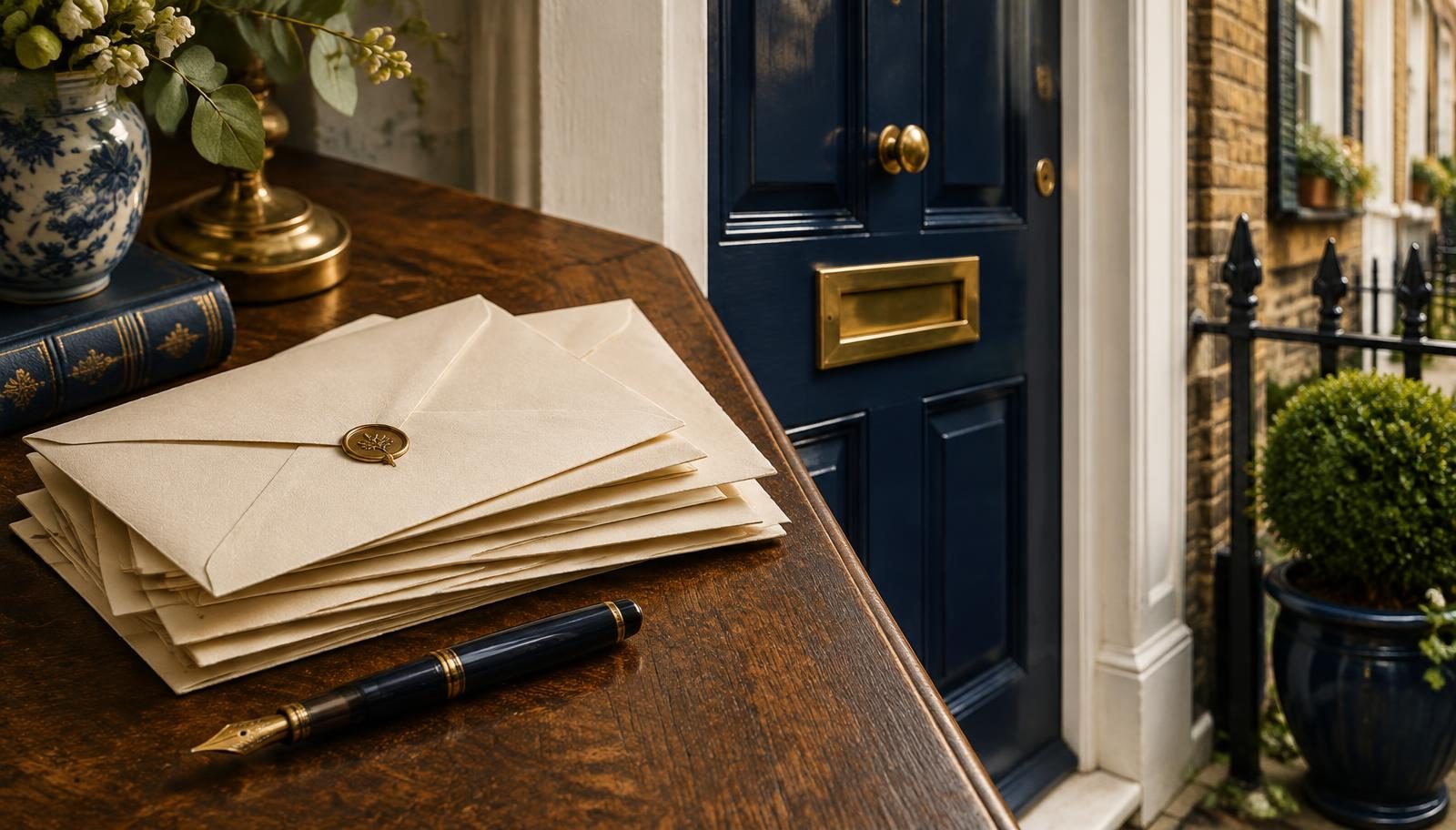
If you own a UK property with a slightly peeling front door, an overgrown privet hedge, or a tenant who seems to have stopped paying rent during the previous monarch's reign, you already know the ritual.
On a Tuesday morning you step over a takeaway menu and a gutter-cleaning flyer and find it: a crisp cream envelope. Inside is a letter that begins:
"Dear Esteemed Homeowner, I happened to be walking down your charming street yesterday when your house caught my eye. I am a private local buyer looking for our forever family home..."
Never mind that your property is an unmodernised Victorian mid-terrace with rising damp, directly opposite an industrial metal shredder. The writer is deeply, spiritually moved by your brickwork.
Welcome to the misunderstood and occasionally profitable world of Direct-to-Vendor (D2V) marketing.
For sourcers and investors, D2V is sold as the Holy Grail: skip the estate agent, avoid Rightmove bidding wars and negotiate directly with a motivated seller over a lukewarm instant coffee. Between the guru fantasy and the recycling bin, though, there's a huge range of ways to do it — from blistered feet and lined paper to automated pen-plotting machines.
Here's an honest, slightly cynical and genuinely practical look at how D2V letters work, the cheapest way to send them and the eye-wateringly expensive way.
The anatomy of the cringe: what most people get wrong
Before we talk about how to send them, let's talk about what most people put inside them. Amateur property letters usually fall into one of two tragic categories:
- The fake-handwriting trick. A squiggly blue font meant to look like Aunt Brenda wrote it, sometimes with a printed "coffee ring" in the corner. Nothing builds trust for a six-figure deal like a computer font pretending to hold a biro.
- The corporate jargon bomb. "We represent an institutional fund with liquid syndicate facilities seeking distressed assets for yield compression." To an 82-year-old probate executor who just wants someone to clear their late uncle's shed, this reads like a scam letter from Mars.
The letters that get answered are refreshingly boring, completely transparent and focused on one thing: solving a specific headache quietly, with no fuss and no estate agent board.
Method 1: The scrappy bootstrap (around £1–£2 per letter, plus your dignity)
The idea: maximum effort, zero tech and a pair of sturdy trainers.
This is the classic starting point for new sourcers who spent their last £3,000 on a weekend seminar and now have £42.50 of working capital left.
How it works
- Walk for deals. Pick a target area — say, terraced streets in Southampton, Portsmouth or Reading. Look for signs of distress: curtains closed all day, post piling up, rotting sash windows, or a garden that could host an episode of Planet Earth.
- Check the title. At home, download the official title register from HM Land Registry (a few pounds per title). If the owner's address differs from the property address, you may have found an absentee landlord or an inherited property.
- Write it properly. Plain white envelope, decent paper and a genuinely handwritten note with an actual pen.
- Deliver it. Post it second class, or hand-deliver it on your evening walk if you're seriously counting pennies.
Pros: unbeatable authenticity. A real note from a real local person is far more likely to be opened and read than glossy junk mail.
Cons: almost no scale. After writing and delivering 30 letters by hand, your hand will cramp into a claw and you'll start questioning your life choices.
Method 2: The semi-pro targeted campaign (roughly £2.50–£4 per letter)
The idea: efficient, professional and repeatable without repetitive strain injury.
This is where serious small operators live. You're not pretending to be a wandering romantic looking for a cottage — and you're not pretending to be BlackRock either.
How it works
- Targeted data. Use property data tools to filter for owners who've held a property for 15+ years, homes that look long-term empty, expired planning permissions or portfolio landlords.
- Personalised printed letters. A clean, typed letter on branded letterhead that says what you actually do: "We buy properties needing full refurbishment across Hampshire, with no agency fees and no open-house viewings."
- Structured follow-ups. Almost nobody replies to the first letter. Send a three-letter sequence, four to six weeks apart:
- Letter 1: a gentle introduction and the problem you solve. - Letter 2: a relevant, true example of a similar situation you've helped with. - Letter 3: the polite break-up letter — "I assume you have plans for the property, but here's my direct number if anything changes."
Pros: targeted, respectful, professional and much easier to keep compliant.
Cons: needs discipline, good copywriting and a proper system for tracking replies and opt-outs.
Method 3: The high-roller machine (£3,000 to £10,000+ per campaign)
The idea: why walk down a street when software can do it while you sleep?
This is how large acquisition companies and high-volume sourcing agencies play. It's a full industrial direct-mail funnel.
How it works
- Automated data feeds. Ongoing monitoring of signals such as probate, insolvency notices, planning decisions and short leases.
- Robotic pen-plotting. Forget handwriting fonts. Specialist mailing companies use machines holding real ink pens that physically write each letter, with small variations so it looks hand-done.
- Luxury stationery. Heavy textured paper, premium envelopes, wax seals and real stamps stuck on slightly crooked so they look human.
- Tracking and call handling. Each letter has a QR code to a personalised landing page, a dedicated tracking phone number, and a trained reception team that screens calls and books appointments straight into your calendar.
Pros: huge scale. You can send thousands of targeted letters across several counties in an afternoon.
Cons: a big burn rate. With poor data or the wrong message, you can spend thousands to receive three angry phone calls and zero completed deals.
Cheapest vs most expensive at a glance
| | Scrappy bootstrap | Semi-pro campaign | High-roller machine | |---|---|---|---| | Typical cost | ~£1–£2 per letter | ~£2.50–£4 per letter | £3k–£10k+ per campaign | | Volume | Tens | Hundreds | Thousands | | Authenticity | Very high | Good | High if done well | | Main risk | Your time | Inconsistent follow-up | Burning cash on bad data |
Costs are rough illustrations and vary with postage, printing, data and suppliers.
The fine print the gurus forget (compliance)
Before you carpet your town in paper, a quick reality check:
- UK GDPR and legitimate interests. Using owner names and addresses to send unsolicited marketing needs a lawful basis. Most businesses rely on legitimate interests, which means doing and recording a Legitimate Interests Assessment, telling people where you got their details, honouring opt-outs immediately and keeping a suppression list. The ICO's direct marketing guidance is the place to start.
- Don't mislead people. If your letter says "I'm a private buyer looking for my family home" but you're actually a sourcer planning to pass the deal to an investor for a fee, that's the kind of misleading practice consumer protection law exists to stop. Be clear about who you are and what you do.
- Be careful with complex arrangements. If your letter mentions lease options, assisted sales or vendor finance, take advice so you don't stray into regulated activity or unlawful financial promotions.
- Be kind. Many recipients are grieving, ill, in debt or overwhelmed. Pressure tactics aren't just unpleasant — they can also be unlawful.
The verdict
Whether you're licking second-class stamps at the kitchen table or running a fully automated campaign, the rule of the letterbox never changes:
Gimmicks don't win property deals. Clarity and empathy do.
Sellers who reply to letters aren't looking for a pen pal. They want someone who understands probate delays, tenant headaches or an empty property quietly draining council tax — and who can offer a clean, discreet route out without the circus of the open market.
Thinking about selling, letting or partnering on your property? Explore our landlord services or list your property for a discreet conversation.
Investor looking for off-market opportunities? See our current deals or ask us to source a property for you.
This article is for general information only and isn't legal, tax or financial advice. Vestos Property is a trading name of Proinvestos Ltd (company 15659553). We're not authorised by the Financial Conduct Authority.