
Buying an HMO in Hampshire: Licensing, Article 4 Directions & Practical Sourcing
How to separate planning permission from HMO licensing, check council requirements and assess the real operating costs of a Hampshire shared-house purchase.
7 November 2026 · Vestos Property
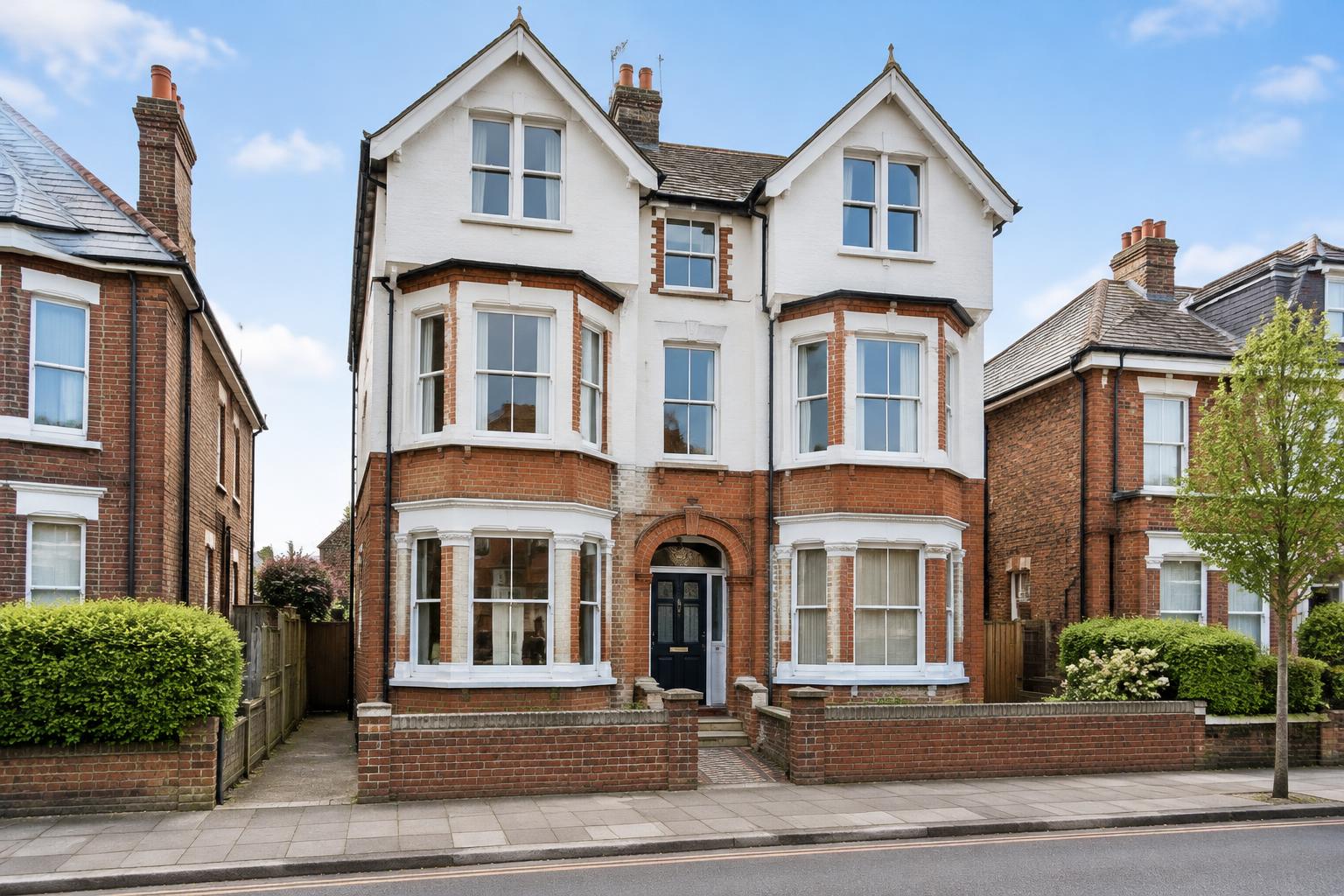
Updated: 7 November 2026. This guide concerns England and the Hampshire area, including the separately administered cities of Southampton and Portsmouth. Check rules for the property’s actual address before committing to a purchase.
1. Why consider a shared-house purchase?
A house in multiple occupation (HMO) can generate rent from several households rather than a single household. That can produce higher aggregate gross rent in some properties, but it does not guarantee higher net returns or lower risk.
Utilities, licensing, fire precautions, room turnover, cleaning, maintenance and management can materially change the result. Assess whether local demand, the lawful occupancy and the operating costs support the proposed use—not just whether the advert describes an attractive yield.
2. Planning permission and licensing are different checks
Planning concerns the lawful use of the building. Licensing concerns whether the relevant housing-licensing scheme applies and whether its requirements are met. A licence does not prove planning permission, and planning permission does not remove a licensing requirement.
An ordinary dwelling is generally within use class C3. A small HMO accommodating three to six residents is generally within C4, subject to the statutory definition. Larger HMOs generally fall outside those classes as sui generis. A proposed change to a larger HMO will normally require planning permission where it constitutes a material change of use; it is inaccurate to say that every existing seven-person property always needs a new application regardless of its history.
Obtain documentary evidence of the existing lawful use. Planning decisions, conditions, lawful-development certificates and the occupation history may all matter.
3. What an Article 4 direction changes
Permitted-development rights can ordinarily allow a C3-to-C4 change in England, subject to their scope and conditions. An Article 4 direction can remove those specified rights, meaning planning permission is needed for a change covered by the direction.
Southampton has a citywide C3-to-C4 Article 4 direction. Do not assume that it only affects a few wards. For Portsmouth and other Hampshire-area authorities, check the current council direction, map, effective date and the exact address.
An Article 4 direction is not a blanket ban on all HMOs. Existing lawful use, the proposed change and local policy must be considered. Nor is there one Hampshire-wide concentration cap: council policies and assessment methods differ, so avoid treating an advertised percentage or radius as universally applicable.
Ask the planning authority or a qualified planning adviser to confirm the position in writing where it is uncertain.
4. When is an HMO licence required?
Mandatory HMO licensing in England generally applies where five or more people, forming two or more households, share facilities, subject to statutory definitions and exemptions.
Smaller HMOs may still require a licence under an additional licensing scheme. A separate selective licensing scheme can also affect privately rented homes within its designated area. Check the current scheme, boundaries and commencement date rather than assuming that fewer than five occupiers means no licence is needed.
An HMO licence is property-specific and cannot be transferred to the buyer. Discuss the application process and timing with the council before completion, including how the property can be lawfully operated during the change of ownership. Do not assume the seller’s licence automatically covers your business.
5. Bedrooms, facilities and fire precautions
National mandatory-licensing conditions include minimum sleeping-room areas: 6.51 m² for one person aged 10 or over, 10.22 m² for two people aged 10 or over, and 4.64 m² for one child under 10. These are not a guarantee that a room is acceptable: local requirements, usable floor area, occupancy conditions and the whole property’s layout may require more space.
Councils assess cooking, washing, toilet and communal facilities against the occupancy and applicable standards. There is no single kitchen or bathroom ratio that should be assumed for every Hampshire HMO.
Fire precautions also need property-specific assessment. Alarm design, doors, compartmentation and escape routes depend on the building’s layout, storeys, occupancy, applicable fire duties and licence conditions. A generic instruction to fit one alarm grade and one door type everywhere is not an adequate fire-safety plan.
Commission competent assessment where needed and obtain the council’s current amenity and fire guidance before pricing refurbishment works.
6. Buying an existing HMO: due diligence checklist
- Confirm lawful use: check the planning register, permission conditions, certificates and any enforcement history. Do not rely solely on the estate agent’s description.
- Check licensing: obtain the current licence, approved occupancy and room limits, conditions and evidence of compliance; plan your own application.
- Inspect the building: examine room sizes, damp and mould, ventilation, fire precautions, utilities and the condition of kitchens and bathrooms.
- Review tenancies: check occupation, rent, deposits, arrears, notices and the effect of current tenancy law. England’s main Renters’ Rights Act reforms took effect on 1 May 2026, so older AST assumptions may be outdated.
- Check operating records: request safety reports, maintenance records and actual income and expenditure, using appropriately redacted information where necessary.
- Verify finance and insurance: obtain advice for the actual use and occupancy. An ordinary buy-to-let mortgage or policy may not cover the proposed HMO operation.
- Agree professional advice: have your solicitor review title, tenancy and transaction issues and agree the scope and cost in advance. Planning, fire or building advice may need separate specialists and separately agreed fees.
7. Gross rent is not the same as cash available
Prepare a realistic operating budget covering bills-included utilities, council tax where applicable, broadband, cleaning, repairs, insurance, management, licensing, safety inspections, voids and bad debt.
Stress-test lower occupancy and higher costs. Keep refurbishment contingency and check the time needed for permissions and licensing. A higher gross rent does not mean the property can legally accommodate the advertised number of tenants or deliver the suggested net yield.
For mortgage affordability and wider landlord duties, read our buy-to-let rules and stress-testing guide. To discuss a property search, send your sourcing or service requirements.
Official sources and local checks
- GOV.UK HMO licence guidance
- HMO and residential property licensing reform guidance
- Southampton’s Article 4 direction
- Southampton HMO planning questions
- Portsmouth City Council — check its current HMO planning and licensing guidance for the address.
- Find the relevant local council
- Landlord safety responsibilities
- Renters’ Rights Act overview for landlords
General information only, not financial, tax, legal, planning or fire-safety advice. Always verify requirements with the relevant council and appropriately qualified advisers. Proinvestos Ltd (trading as Vestos Property) is not authorised by the FCA. Property investment puts capital at risk. Cover image is an illustrative generated image, not a listed HMO or evidence of a building’s licensed status.
Get new articles by email
New guides for UK property investors and landlords, sent when we publish. No spam. Unsubscribe any time.