
Damp and Mould in UK Property: Types, Viewing Checks, Fixes and Buying Leverage
How to tell rising damp, penetrating damp and condensation apart, spot hidden moisture at a viewing, understand the usual fixes, and use findings when negotiating a purchase.
31 October 2026 · Vestos Property
Damp and Mould in UK Property: Types, Viewing Checks, Fixes and Buying Leverage
Damp and mould are no longer just a cosmetic issue. With Awaab's Law introducing strict response times in social housing and the Renters' Rights reforms raising standards across the private rented sector, landlords and investors are under more pressure than ever to deal with moisture problems quickly. For buyers, knowing what you are looking at during a viewing can save thousands of pounds and give you real negotiating power.
Important: This is general information, not surveying, legal or financial advice. Always instruct a qualified, independent surveyor (RICS) or a damp specialist (for example, PCA-accredited) before relying on any diagnosis.
Why it matters right now
- Health: Mould spores can trigger asthma, allergies and respiratory problems, particularly for children and older people.
- Law: Damp and mould are assessed as a hazard under the Housing Health and Safety Rating System (HHSRS). Landlords who fail to act face enforcement, rent repayment orders and reputational damage.
- Value and finance: Lenders may hold back funds or down-value a property where a survey flags damp.
The three main types of damp
1. Condensation (the most common)
What causes it: Warm, moist air from cooking, showers, drying clothes and breathing hits a cold surface and turns to water.
How to identify it:
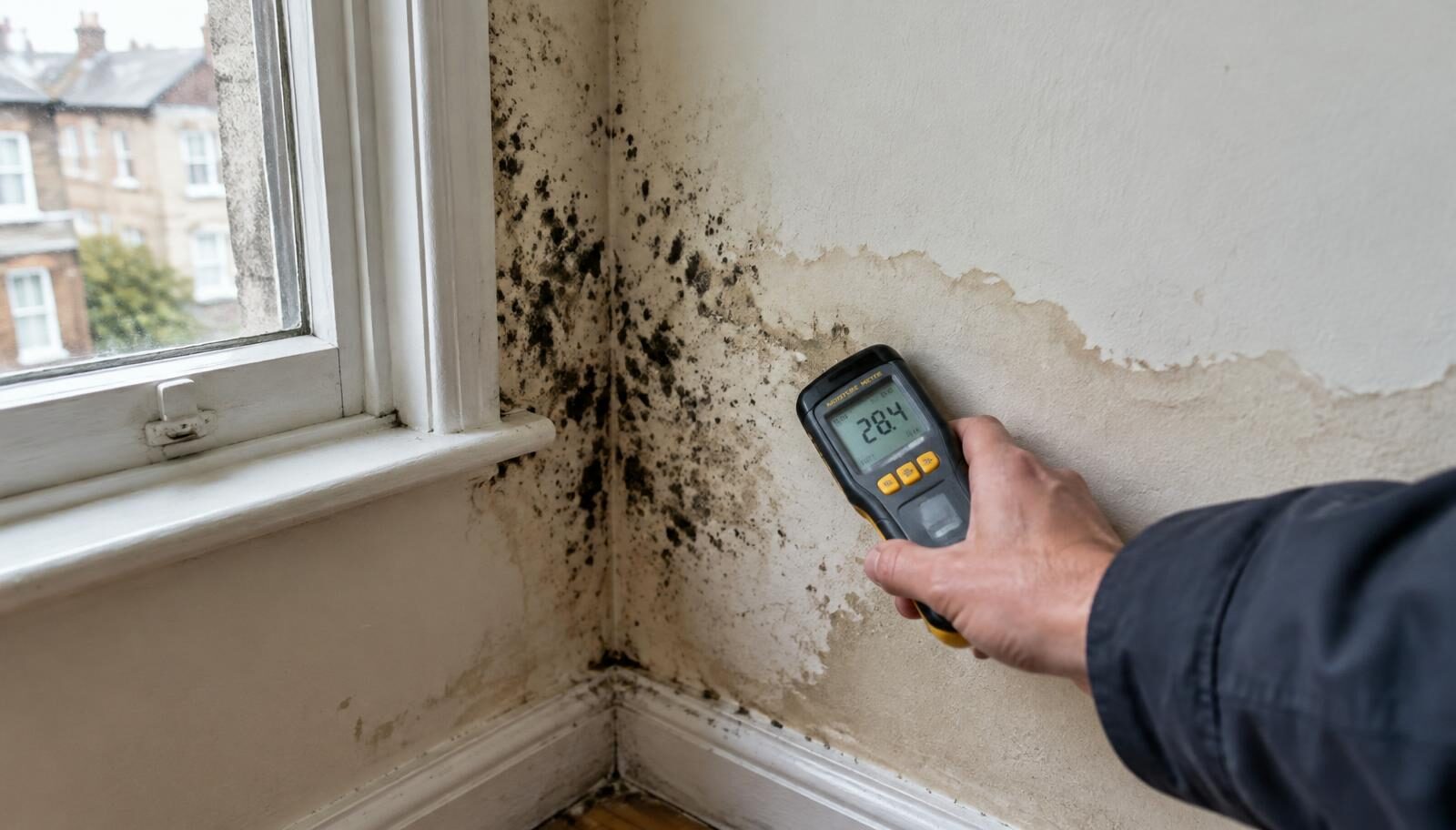
- Black spotty mould in corners, behind furniture, around window frames and on ceilings of bathrooms and bedrooms
- Streaming windows in the morning
- Musty smell and mould on clothing in wardrobes
- Usually worse in winter and in rooms with poor ventilation
How to fix it:
- Fit or upgrade extractor fans in kitchens and bathrooms (humidity-controlled fans are ideal)
- Improve background ventilation with trickle vents or a positive input ventilation (PIV) unit
- Keep heating at a steady, moderate level and improve insulation to remove cold spots
- Treat mould with a fungicidal wash, then repaint with anti-mould paint once the cause is fixed
2. Penetrating damp
What causes it: Water getting in from outside through defects such as cracked render, failed pointing, blocked or leaking gutters, damaged roofs, poor window seals or bridged cavities.
How to identify it:
- Isolated damp patches that grow darker after rain
- Patches high on walls or on ceilings, often under a defect outside
- Blown plaster, flaking paint, or tide marks that do not follow a straight line
How to fix it:
- Find and repair the external defect first: gutters, downpipes, roof tiles, flashing, pointing or render
- Let the wall dry out fully (this can take months) before replastering
- For solid walls in exposed positions, consider breathable treatments recommended by a specialist
3. Rising damp (rarer than often claimed)
What causes it: Groundwater drawn up through masonry by capillary action, usually where a damp-proof course (DPC) is missing, failed or bridged.
How to identify it:
- A horizontal tide mark up to about 1 metre above floor level
- Salts (white, fluffy deposits) on the wall surface
- Crumbling plaster and decaying skirting boards
- Damp at low level on ground floor walls only
How to fix it:
- First check for bridging: raised soil, patios or paths above the DPC, rendered plinths or debris in cavities. Removing these often solves the problem cheaply
- Where genuinely needed, a chemical injection DPC or other system installed by a reputable contractor with an insurance-backed guarantee
- Replace contaminated plaster with a suitable salt-resistant render
Investor tip: Many reports of "rising damp" turn out to be condensation, a leaking pipe or bridged ground levels. Be wary of contractors who offer free surveys and then sell expensive treatments. An independent surveyor who is not selling works gives a fairer view.
Other moisture sources to rule out
- Plumbing leaks: damp around pipes, boilers, radiators or under baths and showers
- Defective drains: can cause damp and even contribute to subsidence
- New-build moisture: walls and floors drying out in the first year or two
How to spot damp and mould at a viewing
Sellers sometimes repaint or move furniture to hide problems. Use this checklist:
- Use your nose. A musty or earthy smell is often the first sign, even if walls look clean.
- Check fresh paint. A single freshly painted wall or patch in an otherwise tired room deserves a closer look.
- Look behind and under. Peek behind wardrobes, sofas and curtains, and inside built-in cupboards, especially on external walls.
- Inspect windows. Look for mould on seals, rotten timber sills, condensation between double-glazed panes and staining below the frames.
- Check ceilings. Brown stains under bathrooms or the roof suggest leaks.
- Examine skirting boards and floors. Soft or crumbling timber, lifting floor coverings and salts near the base of walls are warning signs.
- Look for dehumidifiers and air fresheners. Several running at once may hint at a problem being managed.
- Walk around the outside. Check gutters, downpipes, pointing, render, roof tiles, and whether ground levels sit above the DPC line or air bricks are blocked.
- Ask direct questions. Has there been damp treatment? Is there a guarantee? Have there been any insurance claims or leaks?
- Bring a moisture meter if you have one. It is only a guide (readings on salty plaster can mislead), but high readings help you decide where a surveyor should focus.
What to do if you find it
- Note the location and take photos
- Book a RICS Level 2 or Level 3 survey, and a specialist damp or timber report if needed
- Ask for any existing guarantees and confirm they are transferable
- Get written quotes for the work before you exchange contracts
The benefits for buyers and investors
Spotting damp early is not just about avoiding problems; it can create opportunity.
- Negotiating leverage: Documented defects and contractor quotes give you solid grounds to request a price reduction or ask the seller to complete works before completion.
- Accurate budgeting: Knowing the likely repair costs means your refurbishment budget and returns are based on reality rather than guesswork.
- Value-add opportunities: Many properties with simple condensation or gutter issues are marked down by buyers who panic. A clear diagnosis can turn that into a well-priced purchase.
- Smoother finance: Addressing issues up front reduces the risk of a lender retention or down-valuation late in the process.
- Compliant, happier tenants: Fixing causes properly reduces voids, complaints and enforcement risk, and protects your reputation as a landlord.
- Long-term asset protection: Moisture left unchecked can lead to rot, structural damage and costly repairs. Early action protects capital value.
Landlord quick checklist
- Respond to damp and mould reports promptly and record your actions
- Investigate the cause, not just the symptom
- Keep fans, vents and heating systems in working order
- Give tenants practical guidance on ventilation and heating, without blaming them by default
- Schedule regular inspections, especially before and during winter
How Vestos Property can help
Whether you are buying, letting or managing property, we can help you assess opportunities with eyes open. Explore our sourcing service, services for landlords or contact us to talk through a property.
Vestos Property is a trading name of Proinvestos Ltd. This article is for general information only and does not constitute surveying, legal or financial advice.
Get new articles by email
New guides for UK property investors and landlords, sent when we publish. No spam. Unsubscribe any time.