Mirror & Chrome Paint in Serviced Accommodation: High-Impact Design vs Guest Safety
How reflective walls and ceilings can lift short-let listings, plus essential guidance on surface prep, lighting, VOC fumes and guest turnaround.
6 November 2026 · Vestos Property
Design and operations guide · 6 November 2026
In the UK serviced accommodation (SA) and short-let market, listing photos do a lot of the selling. Guests often decide within seconds while scrolling Airbnb or Booking.com, so distinctive interiors can help a property stand out.
One trend some operators and designers are exploring is mirror-effect and metallic chrome paint on large surfaces—feature walls, dining alcoves and even whole ceilings.
Done well, high-reflectivity finishes can make a modest room feel bigger and brighter. Done badly, they expose every flaw in the plaster, create glare, and—depending on the product—can leave fumes that are not acceptable for paying guests. This guide covers both sides.
1. The design appeal: why operators consider mirror finishes
A. Making rooms feel taller
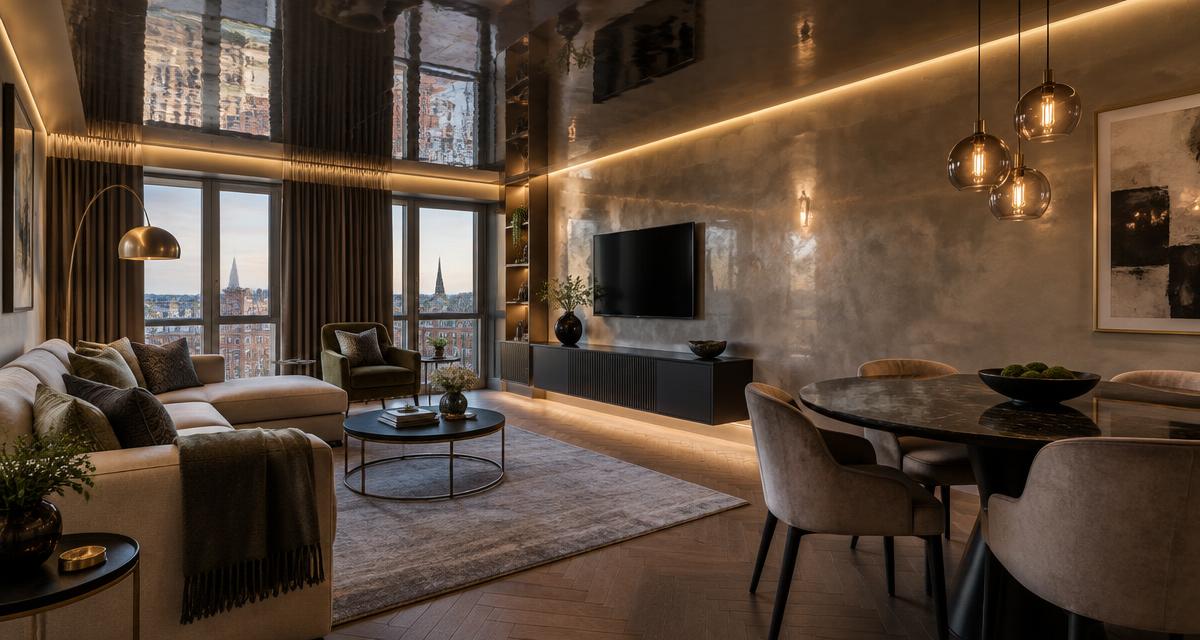
In many UK homes with ceilings of around 2.4 metres, a dark, high-gloss or mirror-effect ceiling can create an illusion of depth. Instead of a flat boundary, the ceiling reflects the room below, which can make the space feel more open.
B. Bouncing light into darker spaces
A reflective wall can work a bit like a large mirror, spreading daylight into darker corners without the weight, fixings or cost of big glass panels.
C. Eye-catching listing photography
Reflective surfaces paired with warm, directional lighting tend to photograph with strong contrast, which can help a listing stand out in search results. Whether it improves bookings for a particular property will depend on location, price, reviews and the rest of the interior.
2. Surface preparation: the high-gloss reality
The biggest technical hurdle is the surface underneath:
- Imperfections show: Matt and eggshell paints hide small hollows, scratches and hairline cracks. High-gloss and mirror finishes do the opposite—they highlight them.
- Plaster standard: A standard skim is often not flat enough. Expect a fine finishing skim, careful sanding and a suitable primer recommended by the paint manufacturer.
- Application method: Rollers can leave texture ("orange peel") that breaks up reflections. A genuine mirror-like result usually needs spray application by an experienced decorator.
3. Health and safety: VOCs, fumes and guest turnaround
For short-let operators, guest safety and quick changeovers both matter, so the choice of product is critical.
Solvent-based "liquid chrome" products
Some high-shine chrome and mirror-effect products are solvent-based and can contain high levels of volatile organic compounds (VOCs).
- Spraying a large area, such as a whole ceiling or feature wall, uses far more product than painting a lamp base or trim, so more vapour is released during application and drying.
- Exposure to solvent vapours in a poorly ventilated room can cause headaches, eye irritation, dizziness or breathing irritation, particularly for sensitive people.
- Turnaround risk: Drying and curing times vary widely by product, temperature and ventilation. Some solvent finishes can smell for several days. Never book guests in until the manufacturer's recommended cure time has passed and the room is well ventilated and odour-free. Lingering smells risk complaints, poor reviews and refund requests.
Always read the product's Safety Data Sheet (SDS) and follow COSHH guidance. Contractors must use appropriate ventilation and protective equipment while spraying.
Lower-emission alternatives
If you want a reflective look with less solvent risk, consider:
- Water-based metallic paints: These give a pearlescent or satin-metallic sheen with typically lower odour and shorter drying times—though not a true mirror finish. Check the specific product's VOC rating and re-occupation guidance.
- Polished Venetian plaster: Traditional lime-based plasters can be burnished to a deep, high-sheen finish. Many are low in VOCs and breathable, but some include additives or waxes—check the product information.
- Water-based high-gloss lacquers: These can give deep gloss reflections, usually with lower emissions than solvent-based chrome systems.
- Non-paint options: Acrylic mirror panels or architectural foils can give a reflective look without large-scale spraying on site.
4. Room selection: where it works and where it doesn't
Better suited:
- Living and dining areas: For a moody, evening-focused atmosphere.
- Entrance hallways: Immediate visual impact as guests arrive.
- Media alcoves: Enhancing ambient lighting.
Use with caution:
- Bedrooms: Mirror-effect ceilings above beds can feel uncomfortable for some guests, such as families or business travellers.
- Under harsh downlights: Spotlights aimed at a high-gloss ceiling can create glare. Indirect lighting such as concealed LED coves, wall washers or warm pendants (around 2700K–3000K) usually works better.
Summary checklist for SA operators
| Consideration | Recommendation | | :--- | :--- | | Product type | Prefer lower-VOC water-based metallics, Venetian plaster or panels over solvent-based chrome where possible. | | Cure and ventilation | Follow the manufacturer's cure and re-occupation times; keep the room ventilated and unoccupied until odour-free. | | Surface | Ensure plaster is very flat; expect spray application for a mirror effect. | | Lighting | Use indirect, warm lighting rather than spotlights aimed at the surface. | | Placement | Focus on living, dining and hallway areas rather than main bedrooms. | | Contractor | Use an experienced decorator who follows SDS and COSHH requirements. |
Disclaimer: This article is general interior design and operational information for property operators, not professional health, safety or construction advice. Always check the manufacturer's Safety Data Sheet and instructions for drying, curing and ventilation, and make sure works comply with UK health and safety requirements. Vestos Property is a trading name of Proinvestos Ltd and is not authorised or regulated by the Financial Conduct Authority.
Get new articles by email
New guides for UK property investors and landlords, sent when we publish. No spam. Unsubscribe any time.