
Signs of Subsidence: How to Spot It, What It Costs and How to Fix It (UK Guide)
What subsidence looks like at a viewing, how it affects mortgages, insurance and investment deals, typical UK repair costs and the steps to take.
27 October 2026 · Vestos Property
Signs of Subsidence: A UK Buyer and Investor Guide to Spotting It, Costing It and Fixing It
Subsidence is when the ground under a building sinks and pulls the foundations down with it. It's one of the most feared words in a survey report. But many cases have a clear cause, such as a leaking drain or a thirsty tree, and can be fixed. This guide covers what to look for at a viewing, how it affects buying and finance, the usual repair costs, and what to do next.
Important: This is general information, not structural, legal or financial advice. Always get advice from a Chartered Structural Engineer (MIStructE or MICE), a RICS surveyor and your solicitor before you buy. The costs below are rough UK guides and change with location, soil type and how bad the damage is.
What causes subsidence?
- Shrinkable clay soil. Clay shrinks in dry summers and swells in wet winters. It's common across London, Hampshire and much of the South East.
- Trees and large shrubs. Oaks, willows, poplars and similar trees draw moisture out of clay, especially within 10–15 metres of the house.
- Leaking drains and water pipes. Escaping water can soften the soil or wash it away under the foundations.
- Mining, made-up ground or old pits. Older backfilled land can settle unevenly.
- Shallow foundations. Many pre-1950s homes and extensions have shallower footings, so they're more sensitive to ground movement.
Signs of subsidence at a viewing
Outside
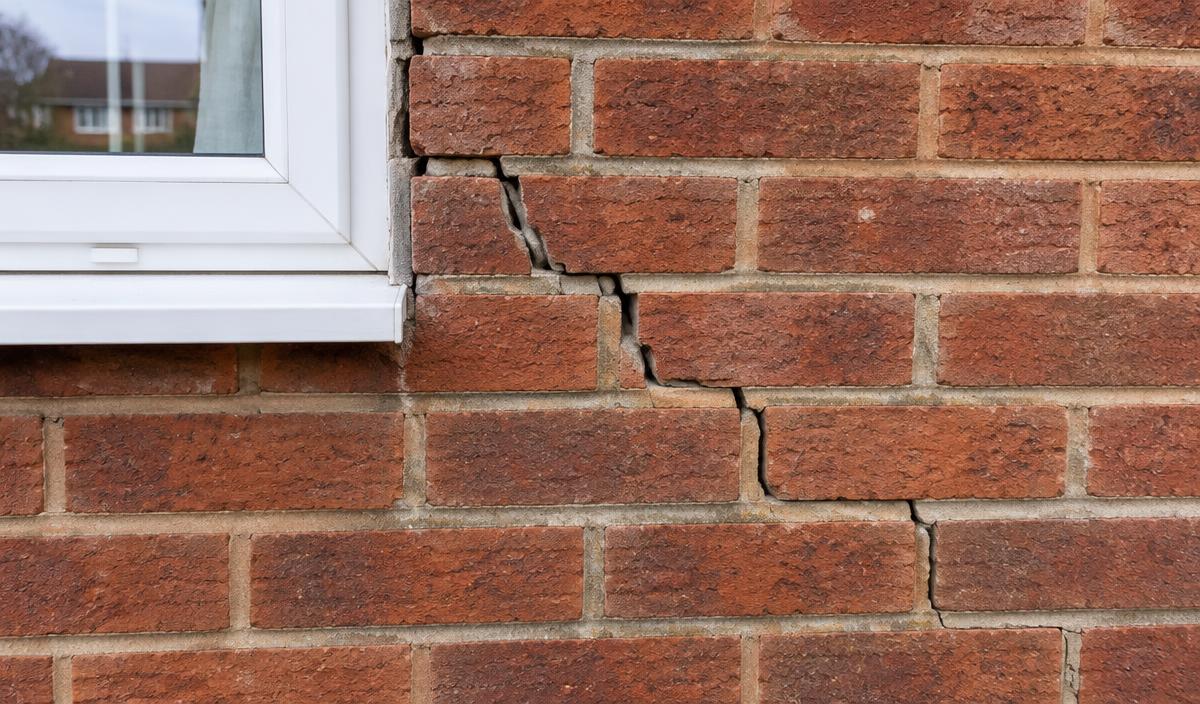
- Diagonal or "stepped" cracks in brickwork, often near doors, windows or corners.
- Cracks wider at one end, which can show one part of the building is dropping.
- Cracks wider than about 3mm (roughly the thickness of a 10p coin).
- A gap opening where an extension, bay window or porch meets the main house.
- Cracked render, leaning walls or distorted garden walls.
Illustrative image: a stepped crack following the mortar joints and widening towards the top.
Inside
- Doors and windows that stick or no longer close properly.
- Diagonal cracks from the corners of doors and windows.
- Torn or creased wallpaper at corners or where walls meet the ceiling.
- Gaps between skirting boards and floors, or floors that slope.
- Fresh filler or new decoration in only one area. Ask the seller why.
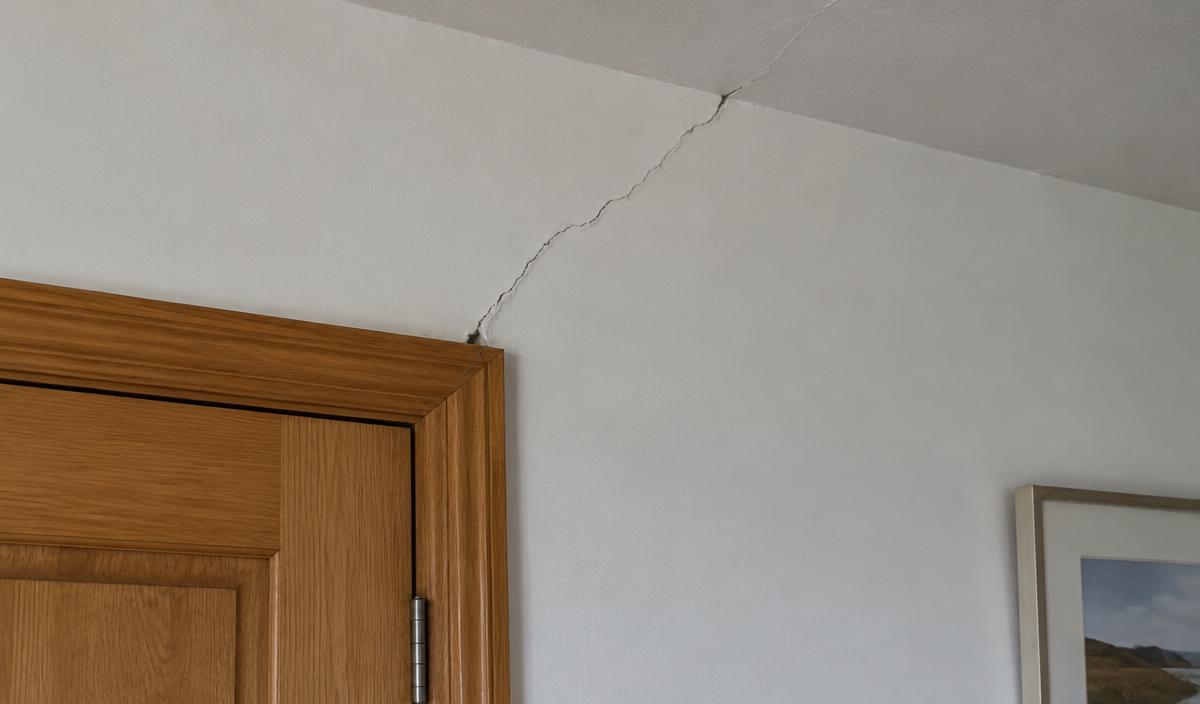
Illustrative image: a crack spreading from a door frame corner, a common internal warning sign.
Around the property
- Large trees close to the house.
- Sunken paving, soggy patches or damp near drains.
- Neighbouring homes with repair work, props or crack monitors.
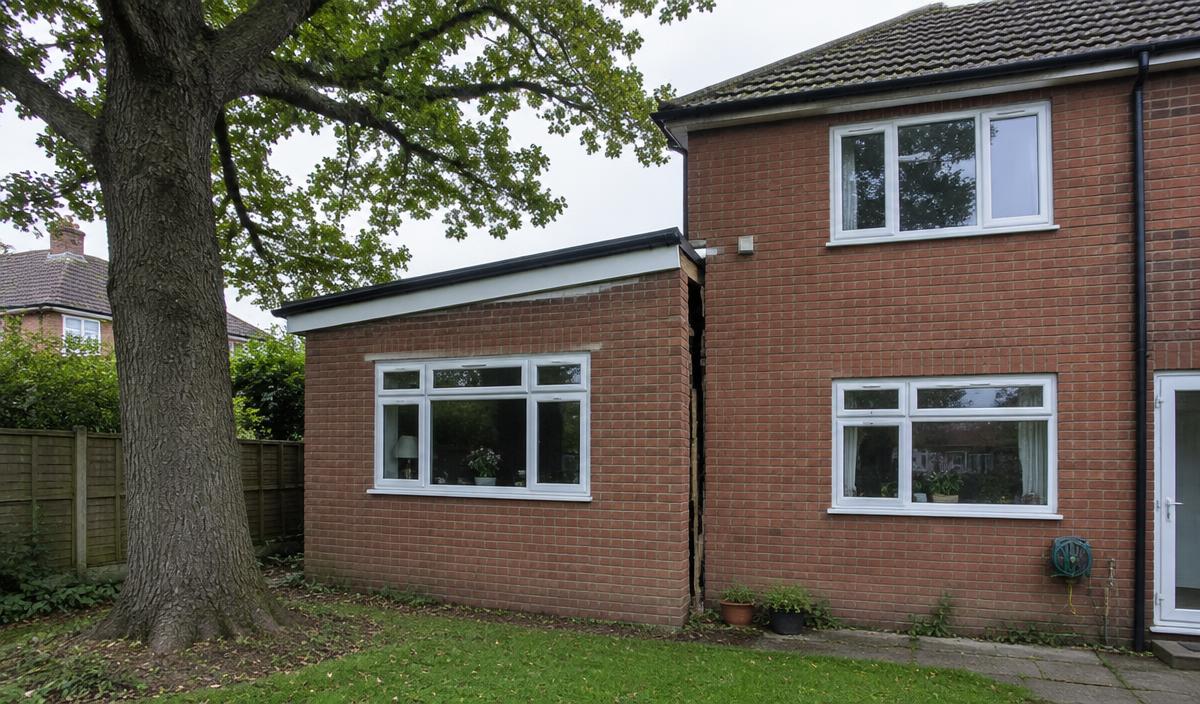
Illustrative image: a gap where an extension meets the main house, with a large tree close by.
Settlement or subsidence?
| | Usually harmless settlement or shrinkage | Possible subsidence | |---|---|---| | Crack shape | Fine, often straight or along plaster joints | Diagonal or stepped | | Crack width | Hairline to about 1–2mm | Often 3mm or more, wider at one end | | Doors and windows | Work normally | Stick or jam | | Over time | Stays the same | Gets wider or comes back after filling | | Extensions | Stay attached | Pull away from the house |
Only an engineer can confirm the cause. A crack's appearance alone isn't enough to decide.
Questions to ask the seller or agent
- Has there ever been a subsidence or heave insurance claim?
- Was the property underpinned or repaired? When, and by whom?
- Is there a Certificate of Structural Adequacy, engineer's report or guarantee?
- Have the drains been surveyed or repaired?
- Is the current building insurance transferable, and what is the subsidence excess?
- Do any nearby trees have a Tree Preservation Order (TPO)?
The seller's property information form (TA6) asks about some of these issues. Ask your solicitor to raise detailed enquiries.
How subsidence affects buying and investing
Mortgages
Many lenders won't lend on a property with active or unresolved movement. A history of subsidence that's been repaired and properly signed off may be acceptable, but some lenders will ask for a structural report or monitoring results.
Insurance
You may face higher premiums, a higher subsidence excess (often £1,000 to £2,500 or more) or fewer insurers willing to cover the property. Get an insurance quote before you exchange contracts.
Value and resale
Unresolved subsidence can reduce a property's value and put off future buyers. A properly documented repair can help restore confidence, but buyers may still ask questions later.
The investor angle
Some properties with structural concerns sell at a discount because many buyers walk away. That can create an opportunity, but only when:
- the cause has been identified by an engineer;
- repair costs have been priced realistically, with a contingency;
- you have funding that doesn't rely on a standard mortgage (for example cash or bridging);
- you've checked whether insurers and lenders will accept it after the repair.
A discount doesn't make a good deal by itself. Budget for monitoring time, repair costs, holding costs, higher insurance and possible delays.
Typical costs (rough UK guide)
| Item | Rough cost | Notes | |---|---|---| | RICS Level 3 building survey | £800 – £1,800 | Recommended for older or unusual properties | | Structural engineer inspection and report | £500 – £1,500 | Identifies the likely cause and next steps | | CCTV drain survey | £150 – £500 | Checks for broken or leaking drains | | Drain repair or relining | £600 – £3,000+ | Depends on depth, length and access | | Crack and level monitoring | £800 – £2,000 | Often 6–12 months, sometimes longer | | Tree pruning, removal or root barrier | £800 – £5,000+ | Check TPO rules and the risk of ground "heave" first | | Resin injection ground stabilisation | £5,000 – £20,000+ | Less disruptive than traditional underpinning | | Traditional underpinning | £10,000 – £50,000+ | Depends on the area treated and access | | Crack repairs, replastering and redecoration | £1,500 – £6,000+ | Only after movement has stopped |
Figures are indicative, exclude VAT where applicable, and should be replaced with real quotes for the property.
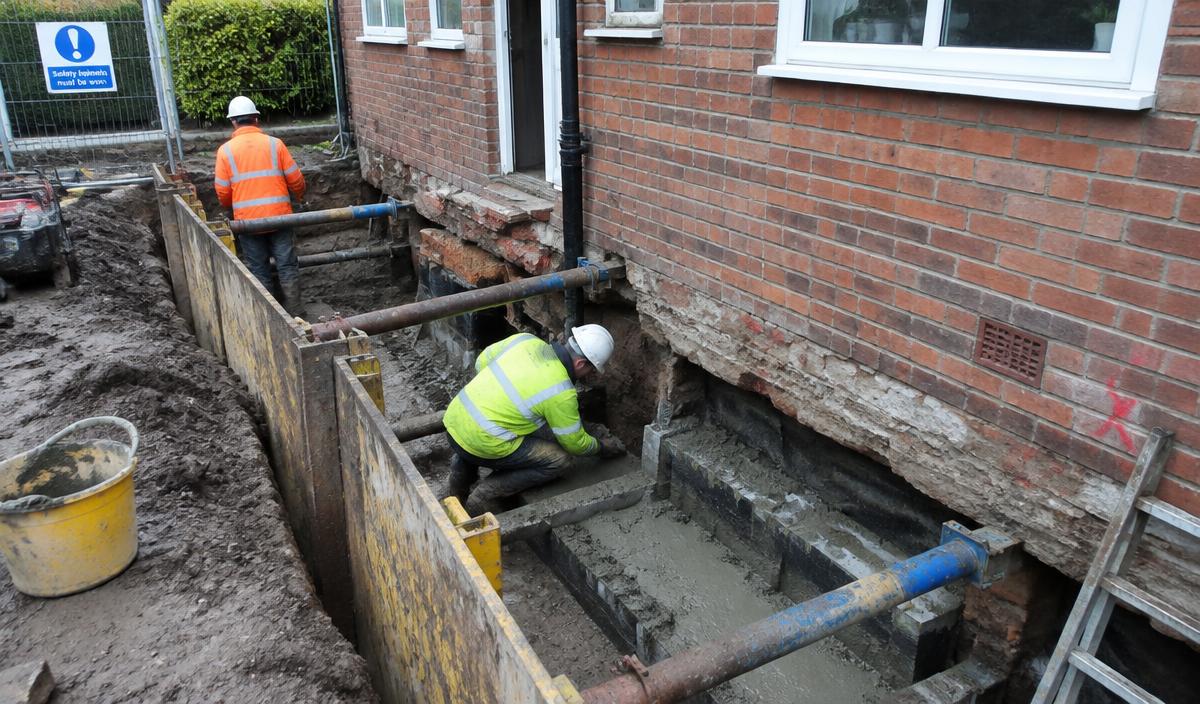
Illustrative image: traditional underpinning, usually the most expensive repair and only used when an engineer recommends it.
Steps to take if you spot signs
- Don't ignore it, but don't panic. Note where the cracks are, take dated photos and measure widths.
- Get a structural engineer's report. A general survey may only say "movement noted".
- Commission a drain survey. Leaking drains are a common and fixable cause.
- Check trees and nearby works. Find out who owns the trees and whether a TPO applies.
- Ask for paperwork and the insurance history. Ask your solicitor to raise enquiries.
- Monitor before major works if advised. This shows whether movement is active or historic.
- Fix the cause first. Repair drains or manage trees before decoration.
- Use underpinning only where it's needed. An engineer should decide this. It isn't the automatic answer.
- Get sign-off. Keep the Certificate of Structural Adequacy, guarantees and invoices. Lenders, insurers and future buyers will ask for them.
- Renegotiate or walk away if needed. Use the engineer's findings and quotes to reassess your offer.
Viewing checklist
- [ ] Diagonal or stepped cracks outside
- [ ] Cracks wider than 3mm or wider at one end
- [ ] Extension or bay pulling away from the house
- [ ] Sticking doors or windows
- [ ] Sloping floors or gaps at skirting boards
- [ ] Large trees within about 15 metres
- [ ] Signs of drain problems
- [ ] Recent patching or redecoration in one area
- [ ] Insurance claim history requested
- [ ] Engineer, drain survey and insurance quote booked if concerns are found
Frequently asked questions
Can I buy a house with subsidence? Yes, but you may need cash or specialist finance unless the problem has been fixed and certified. Get an engineer's report and an insurance quote first.
Is every crack subsidence? No. Many fine cracks come from plaster shrinkage, temperature changes or normal settlement. Wider, diagonal or growing cracks need professional advice.
Does underpinning reduce a property's value? It can affect buyer demand, but properly designed and certified work with full paperwork usually reassures lenders and buyers more than unresolved movement does.
Who pays for subsidence repairs? If you own the property, your buildings insurance may cover subsidence, less the excess and subject to the policy terms. When you're buying, the seller usually isn't obliged to fix it, so the problem is normally reflected in negotiation.
Vestos Property is a trading name of Proinvestos Ltd. We are not authorised by the Financial Conduct Authority and do not give regulated financial, legal, structural or surveying advice. Always get independent professional advice before buying or investing. Property values can go down as well as up.
Get new articles by email
New guides for UK property investors and landlords, sent when we publish. No spam. Unsubscribe any time.